If you’re searching for baby hydrotherapy in London, Ontario, you probably already sense that warm water does something for babies that nothing else does. Newborns spent nine months suspended in fluid; the moment they’re back in warm, gentle water, you can see their bodies remember.
This guide explains exactly what baby hydrotherapy is, what to expect from a session, the developmental and physiological benefits backed by research, who it’s safe for, and how it fits into the broader picture of infant wellness. It’s written by the team at Dolphin Dive Baby Spa, London’s first dedicated baby spa and family wellness centre.
What Is Baby Hydrotherapy?
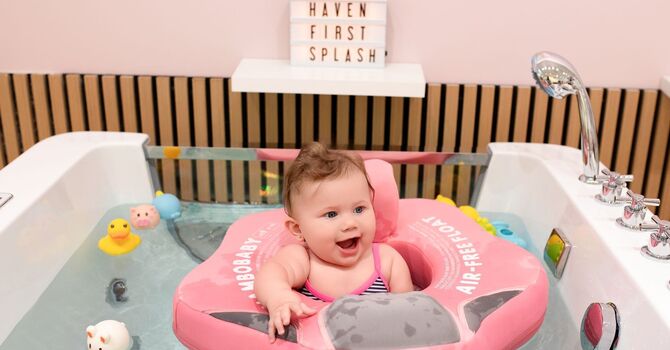
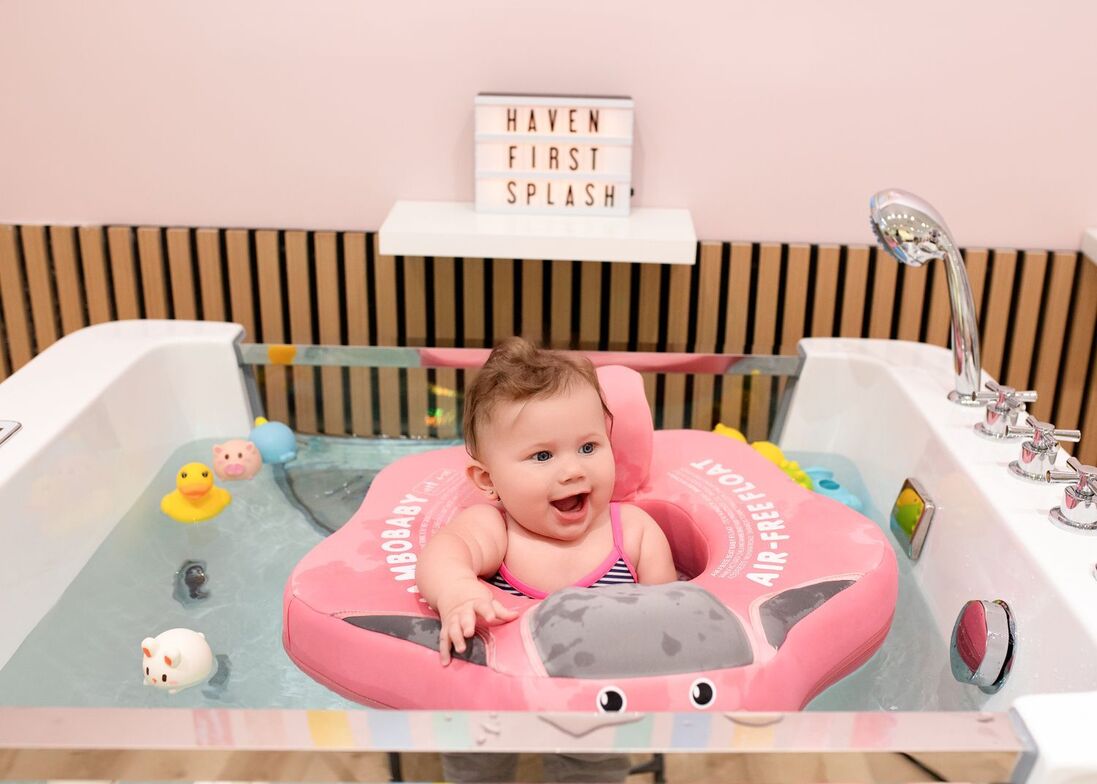
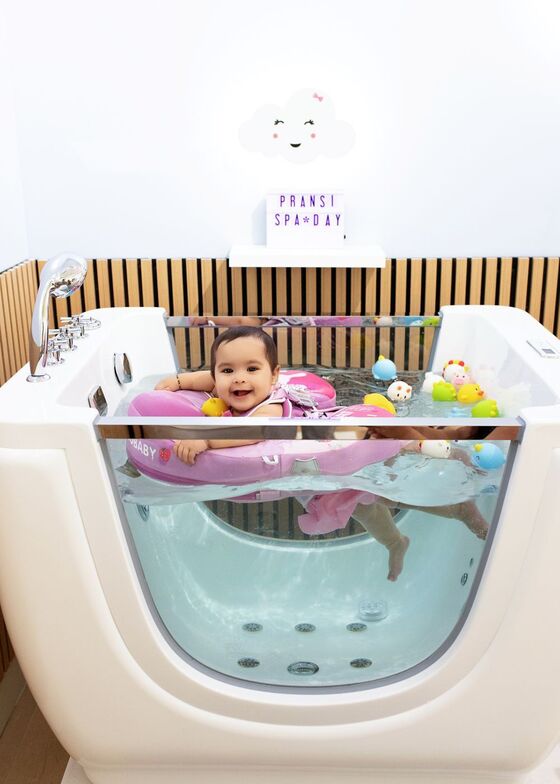
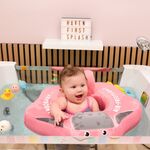
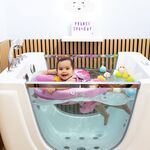
Baby hydrotherapy — sometimes called infant hydrotherapy or baby float therapy — is a guided wellness session in which an infant floats in a custom-designed tub of fresh, warm water. A purpose-built neck float supports the baby’s head while their body moves freely in three dimensions: weightless, calm, and unconstrained by gravity.
It’s a fundamentally different experience from a bath. Bath water is task-oriented — get clean, get out. Hydrotherapy water is therapeutic: temperature-controlled, deep enough for full-body float, and timed so the baby can drop into a deeply parasympathetic (rest-and-digest) state.
At Dolphin Dive, hydrotherapy sessions are supervised by Registered Massage Therapists and experienced staff who work with babies every day, run for 30 minutes, and are designed for babies from 1 month to 3 years old.
Why Warm Water Has Such a Strong Effect on Babies
The science here is more compelling than most parents realize. Three things happen at once when a baby enters warm water:
Buoyancy releases the body. Without the constant pull of gravity, every muscle gets a chance to relax — including the small stabilizing muscles in the neck, shoulders, and core that newborns are still learning to control. Babies who haven’t yet rolled, sat, or crawled experience the freedom of moving on their own for the first time.
Hydrostatic pressure soothes the nervous system. Warm water applies gentle, even pressure across the baby’s skin, similar to swaddling — but distributed perfectly evenly. This is one of the reasons many babies become calm within the first minute or two of a session.
Sensory feedback is rich but predictable. Water provides constant, soft tactile input without sudden surprises. For babies experiencing sensory overload from a noisy world, this is enormously regulating.
The Benefits, Explained
Here’s what parents in London report after their first few sessions, and what the underlying physiology tells us is happening.
1. Deeper, Longer Sleep
The single most common benefit parents notice is improved sleep that same night or the next day. There are two reasons. First, the parasympathetic activation during a session lowers cortisol and primes the baby’s nervous system for rest. Second, gentle full-body movement is mildly metabolically demanding — babies are usually more tired (in the good way) after a session.
2. Relief From Gas, Colic, and Digestive Discomfort
Buoyancy combined with gentle, baby-led movement helps move trapped air through the digestive tract. Many parents notice their colicky baby passing gas or burping during or just after a float. Hydrotherapy is not a medical treatment for colic, but the relief can be meaningful for both baby and parent during one of the hardest stages of infancy.
3. Motor Development and Core Strength
In the water, a baby can do things they cannot yet do on land. They can kick, twist, reach, and extend their full range of motion against gentle water resistance. This builds early core strength, body awareness (proprioception), and coordination — all foundations for hitting milestones like rolling, sitting, and crawling on schedule.
4. Improved Circulation and Joint Flexibility
Warm water dilates peripheral blood vessels and improves circulation throughout the body. For babies, this means more oxygen and nutrients reaching developing tissues, plus gentle range-of-motion work for every major joint without any external force applied to the body.
5. A Foundation for Water Confidence
Babies introduced to warm, safe water in the first year tend to enter pool and swimming environments later in life with markedly less fear. Hydrotherapy is not formal swimming lessons, but it builds the same underlying comfort with the sensation of water on the face, ears, and body.
6. Sensory Regulation
For babies who run a little “hot” — easily overstimulated, hard to soothe, struggling with reflux or eczema — the combined sensory input of warm water (temperature + pressure + movement) is one of the most reliably calming inputs available. Sessions often become a reset for the whole family’s week.
7. A Quiet, Connected Moment With Your Baby
There’s no phone, no list, no laundry. For 30 minutes, you watch your baby experience something they will never be able to describe to you — and your nervous system regulates alongside theirs. Parents tell us this is the part they didn’t expect to value most.
What a Session Actually Looks Like at Dolphin Dive
A baby hydrotherapy session at our London, Ontario studio runs about 30 minutes total. Here’s the rough flow:
Arrival and check-in (about 5 minutes). We greet you in our quiet reception area, walk you through what the session will look like, and answer any questions. If this is your baby’s first visit, we take a little extra time so neither of you feels rushed.
Preparation (about 5 minutes). We help you change your baby into a swim diaper, fit the soft neck float, and make sure the water temperature (between 35–37 °C, just slightly warmer than body temperature) is right for your baby’s age and comfort.
The float itself (about 15–20 minutes). Your baby enters the tub, and we stay close, watching their cues. Some babies start kicking immediately; others take a minute to settle and then drift into stillness. There’s no goal beyond letting them experience the water on their own terms.
Wind-down (about 5 minutes). We dry your baby in a warmed towel and give them a moment in your arms before you head out. Many babies fall asleep in the car on the way home.
If you’d like the full experience, our Baby Hydrotherapy & Massage Combo pairs a 30-minute float with a 30-minute RMT-led infant massage — the massage portion is eligible for coverage under most extended health insurance plans.
Who Should Try Baby Hydrotherapy (and Who Shouldn’t)
Baby hydrotherapy is appropriate for healthy, full-term babies and most preterm babies once they’ve reached an adjusted age of 1 month and been cleared by their pediatrician.
It’s especially helpful for:
- Babies with reflux, colic, or chronic gassiness
- Babies who struggle to settle for sleep
- Babies hitting motor milestones a little late and could use range-of-motion practice
- Babies with mild sensory regulation challenges
- New parents looking for a calm, connected ritual with their infant
Talk to your pediatrician first if your baby:
- Was born significantly preterm and is still in early developmental catch-up
- Has open wounds, fresh stitches, or active skin infections
- Has a fever or recent illness
- Has known cardiovascular, respiratory, or neurological conditions
- Has just received vaccinations (we usually recommend waiting 24–48 hours)
We always do a brief screening before your first session. If hydrotherapy isn’t right for your baby on a given day, we’ll happily reschedule.
How Often Should You Book?
There’s no single right answer, and we don’t push memberships on families who don’t need them. That said, here’s what most of our regulars settle into:
- Weekly for babies actively working on sleep, colic, or motor milestones.
- Every other week as a calming family ritual.
- Monthly once the acute “newborn fog” period is behind you and you’re using sessions for connection more than crisis intervention.
If you’re not sure, start with a single session and see how your baby responds in the 24 hours that follow. We’ll help you decide from there. Our membership packages make repeat visits significantly more affordable for families who find a rhythm that works.
What to Bring to Your First Visit
- A swim diaper (we don’t sell these on site, so bring your own).
- A change of clothes for baby.
- Optional: baby’s favourite towel or comfort item.
- A bottle or planned feed for after — many babies are hungry post-session.
We provide everything else: float equipment, sanitized tub, towels, organic oils for the combo session, and our full attention.
A Note on Safety and Hygiene
Every Dolphin Dive hydrotherapy session uses freshly drained and refilled water — no shared bath, ever. The tub is plumbed directly to hot and cold supply and drain, so it is emptied and refilled for every baby. No chlorine and no chemicals are added, and the water is held between 95 and 100 degrees Fahrenheit. Float equipment is sanitized between every session, and our staff are trained in infant CPR. If you ever want to see our cleaning protocol up close, just ask when you arrive.
Common Questions From London Parents
Is baby hydrotherapy the same as baby swimming?
No. Swimming lessons are about learning a skill. Hydrotherapy is a therapeutic float experience with no instructional goal — your baby simply gets to be in water that feels good.
Will my baby get water in their ears?
The neck float keeps your baby’s ears just above the waterline. We don’t submerge the baby’s head.
Can I bring siblings?
Older siblings are welcome in our reception area but, for safety and so your baby gets a calm experience, they don’t accompany you into the hydrotherapy suite. Parents do best when one adult is with the baby and any siblings are with another caregiver.
How is this different from a bath at home?
Water temperature, depth, duration, equipment, and supervision are all different. The therapeutic effect comes from the combination — recreating any one element at home is not the same experience.
Is the massage portion of the combo covered by insurance?
Yes. The 30-minute infant massage performed by our Registered Massage Therapists is eligible for coverage under most extended health benefits plans. Bring your receipt to submit to your insurer.
The Research Behind Aquatic Therapy for Infants
Infant aquatic therapy is increasingly studied in pediatric literature, particularly for its effects on motor development, sleep regulation, and parent-infant bonding. For parents who want to read further, the Canadian Paediatric Society’s water safety guidance is a good place to start understanding how water environments support healthy infant development.
Book Your Baby’s First Hydrotherapy Session
If you’ve been looking for a way to give your baby — and yourself — a true moment of calm, this is it. Sessions run 30 minutes, are CA$50, and are available 1 month to 3 years.
Book the Hydrotherapy + Massage Combo →
Dolphin Dive Baby Spa & Family Wellness is located at 112-1305 Commissioners Rd E, London, ON. Call us at (226) 984-8000 with any questions.